
The designation by the United States of First Capital Command (PCC) and Vermelho Commando (CV) as terrorist organizations officially came into force last Friday, June 5.
The official decision was published that same day in the Federal Register, the American Official Gazette. The document is signed by Marco RubioUS Secretary of State
The measure grants Brazilian factions the same legal status as groups that, for more than a year, have been the subject of harsh interventions by Washington in Latin America, such as the Sinaloa and Jalisco New Generation cartelsin Mexico; he Aragua Trainin Venezuela; and the Gulf Clanin Colombia.
Another decision published last Friday in the Federal Register and also signed by Rubio allows the assets and assets of people linked to the PCC and the CV who are under US jurisdiction to be frozen without prior notice.
Likewise, it prohibits financial transactions between US persons or companies and these organizations, and provides for sanctions against persons or entities that provide disciplinary, financial or logistical support to said groups.
According to the experts consulted by BBC News Brazil, except in the case of Venezuela, the designation as a terrorist organization has not meant, at least until now, a weakening of these organizations or a decrease in crime.
However, the classification has meant, in some cases, harsher penalties for criminals captured and extradited to the United States and, above all, specific economic sanctions and a much more rigorous withhold watch over the financial transactions of groups in the US and with companies that have ties in US territory.
In Mexico, where six criminal factions received the designation in February 2025, diplomatic pressure on the president’s government Claudia Sheinbaum has intensified in recent months, with the indictment of ten government officials of the state of Sinaloa, including the governor himself, Ruben Rocha Moyafor alleged links to the powerful Sinaloa Cartel.
The Sheinbaum government also denounced an alleged unauthorized operation by the CIA, the US intelligence service, in Mexican territory. According to the government, two agents who were supposedly investigating drug laboratories in the north of the country were identified after dying in a traffic accident.
In Venezuela, pressure on organized crime reached its peak with the armed invasion and capture of the then president, Nicolas Maduroin January of this year.
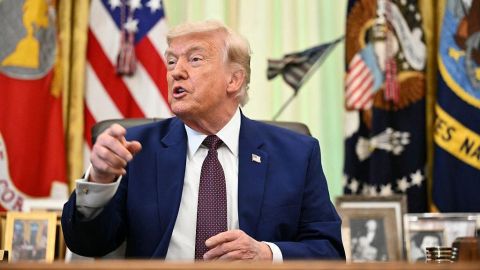
Although the designation of organizations as terrorists is not an appropriate requirement to authorize US intelligence operations abroad, experts say that recent US actions in Mexico and Venezuela are part of the US government’s campaign. donald trump against narcoterrorism.
“The designation definitely changes the tone (of the US) regarding these groups and how they qualify the threat they represent,” says Cecilia Farfán-Méndez, director of the North American Observatory of the World Initiative against Transnational Organized Crime (GI-TOC).
According to Farfán-Méndez, the US action has not caused major changes in the behavior of the affected criminal organizations, but it has had a significant impact on the private sector businesses of the countries involved.
Sanctions and financial supervision
On the first day of his second term in 2025, Trump signed an executive order asking the State Department to designate major Latin American cartels and other criminal organizations as Foreign Terrorist Organizations (FTO).
The classification was confirmed approximately a month later by Secretary of State Marco Rubio. The list of affected organizations included the Sinaloa, Jalisco Nueva Generación (CJNG), Northeast, Gulf, Unidos and Nueva Familia Michoacana cartels, from Mexico, and the Tren de Aragua, from Venezuela.
Later, the Clan del Golfo, from Colombia, were also designated as terrorists; the Cartel of the Suns, from Venezuela; and the groups Los Choneros and Los Lobos, from Ecuador. The groups Neighborhood 18 and Mara Salvatrucha (MS-13), which have branches in several Central American countries and the US, were also included.
With these designations, all of these organizations have been included on the list of the Office of Foreign Assets Adjustment (OFAC) of the United States Department of the Treasury, which administers and applies economic and trade sanctions, and their assets in the United States have been blocked.
This also means that any company or person that provides support to members or institutions linked to these organizations may face sanctions in the US. This includes sending money, providing services, consulting, providing transportation or any other direct or indirect financial assistance.

To date, Mexican cartels have been the main targets of US sanctions.
In the OFAC system, BBC News Brazil has identified that at least 40 people linked to organizations classified as terrorists in Mexico have been personally included on the list since their designation last year. Of them, 23 belong to the Sinaloa Cartel.
More than 50 companies linked to the cartel or these people have been sanctioned, as well as 31 businesses identified as having a connection with the CJNG and its members.
At least 14 people and 4 companies that would have some type of direct connection with the Aragua Train, from Venezuela, have also entered the list of sanctions related to terrorism since February 2025.
Economist Welber Barral, former Secretary of Foreign Trade of Brazil and partner at the consulting firm BMJ, explains that, in addition to the profound effect for the sanctioned individuals and companies, the inclusion of organizations on the OFAC lists has meant a significant increase in the operating costs of companies that operate in the affected countries and that also have a presence in the United States.
Many of these factions are deeply infiltrated in local societies. and they have ramifications in different sectors of the economy, says the expert. Since the definition of “discipline cloth support” adopted by US law is quite broad, companies operating in affected countries may end up being sanctioned for some type of factional link, even unintentionally.
“A US bank that has accounts of people linked to one of these organizations, or a US investor who invests in a company whose supplier is related to one of these groups, can be criminally and civilly sanctioned in the United States if it does not demonstrate that it has carried out due diligence,” Barral exemplifies.
All of this, the expert points out, has significantly increased companies’ expenses on regulatory compliance requirements and prior diligence to avoid problems when investing and operating in countries such as Mexico and Colombia.

Nikos Passas, professor of Criminology and Criminal Justice at Northeastern University, in the United States, also states that entities prosecuted for supporting an organization classified as terrorist by the United States have suffered, in addition to the economic impact, consequences in terms of their reputation.
“In practice, according to the law, not having the intention to support a terrorist organization is not necessarily enough (to prove innocence). Therefore, even without intention, someone can end up getting involved,” says the expert, who collaborated in the implementation of the United Nations conventions against corruption and transnational organized crime.
There are still no exhaustive studies on the impact of all this on local economies, but a report by the market research company Mordor Intelligence, cited by the consulting firm Adjust Dangers, noted that, a year after the designation of six Mexican criminal organizations as terrorists, there was a significant increase in the costs of companies in that country.
The study indicates an increase of 8% to 12% in logistics expenses and a 30% increase in insurance prices for freight trucks in the affected regions.
Law firms and specialized consultancies also reported a significant increase in scrutiny in the agribusiness sector in the Mexican states of Jalisco and Michoacán, where Cartel members have infiltrated supply chains in recent decades.
In addition, the United States Treasury has issued orders requiring all banks that operate in cities bordering Mexico, in the states of California and Texas, to request the identification of clients who carry out cash transactions for an amount greater than 200 US dollars and to communicate such movements to the agency.
In June 2025, three Mexican banks were sanctioned on charges of money laundering coming from drug trafficking.
Two of them, Visa and Mastercard, had access to their payment networks blocked, leaving the banks’ debit and credit cards practically unusable, since the two American companies dominate the payments sector in almost the entire world.
Another case that marked the debate last year involved a private school in Florida, which had to pay a fine of more than $1.7 million for receiving tuition and other fees from two students whose parents have ties to a Mexican cartel, according to the US Treasury.
According to the agency, violations of the IMG Academy boarding school They were not intentional, but they highlight the importance of institutions in various sectors “implementing effective, risk-based controls to avoid sanctions violations.”
This whole panorama, Barral points out, may be distancing potential investors from the countries where the organizations have their headquarters.
“Banks tighten the requirements for opening accounts and complicate operations abroad, so access to credit becomes more difficult,” he explains.
“And, of course, the foreign investor will closely analyze the investment they are making and whether it is worth it.”
So far, there have been no clear signs of a decline in foreign investment caused by the US move to designate terrorist organizations.
But, according to Barral, the scenario has the potential to be especially harmful for Mexicowhich depends largely on the United States and, in 2025, destined approximately 80% of its exports to that country.
Harsher penalties and deteriorated relationships in Mexico
In the criminal field, classification as a terrorist organization carries more severe penalties for those convicted in the United States, explains Nikos Passas.
“Not only are they very severe in economic terms, but also in they include prison sentences that can reach 20 years“says the lawyer and criminologist.
In February of this year, one of the leaders of the Sinaloa Cartel, René Arzate-García (also known as La Rana), was charged with the crimes of narcoterrorism, directing a legal organization, supporting a foreign terrorist organization, international conspiracy to distribute methamphetamine, cocaine, fentanyl and marijuana, and money laundering in California.
The US government has also offered a reward of up to US$10 million for information on the whereabouts of La Rana and his brother, Alfonso Arzate-García (Achilles). The United States Drug Enforcement Administration (DEA) affirms that both have controlled the Tijuana area for the Sinaloa Cartel for 15 years.
Since the Mexican cartels and their members were classified as terrorists, the governments of Donald Trump and Claudia Sheinbaum have carried out a series of negotiations behind closed doors.

Both countries even talked about increasing cooperation and creating joint strategies to combat cartels. The transfers of criminals captured in Mexico to the US also intensified, with almost one hundred prisoners sent to US territory between January 2025 and January 2026.
Sheinbaum was also noted as one of the world leaders who best managed to negotiate truces with the White House before Trump’s accusations about border crime and the imposition of trade tariffs.
But recent events involving local leaders and statements from the National Palace raise questions about what is happening behind the scenes.
In January, after the military operation that captured Nicolás Maduro in Venezuela, Trump implied that other Latin American countries, such as Colombia, Cuba and Mexico could be the next objectives of your government.
In response, Sheinbaum stated during a press conference that Mexican sovereignty would be defended. “Few Mexicans agree with an intervention,” he said.
“Not only does it not help—who are they going to bomb?—but our sovereignty will also be at stake.”
Relations between both countries reached an even more delicate point after the death of two CIA agents in a traffic accident in northern Mexico. According to Mexican authorities, they did not have authorization to operate in the country.
A CNN report also noted that CIA agents directly participated in deadly attacks against cartel targets in Mexico over the past year.
The Sheinbaum government categorically denied it. The president has also been emphatic in stating that foreign authorities can only operate in Mexican territory with prior authorization.
But, shortly after the traffic accident in which the American intelligence agents were involved, The US formally accused the governor of Sinaloa, Rubén Rochaand other local government officials for their alleged involvement with the Sinaloa Cartel.

Although the United States often pursues drug trafficking bosses, formal indictments against high-ranking active Mexican politicians are rare.
According to the US Department of Justice, Rocha and the others conspired with cartel leaders to import large quantities of drugs into the United States in exchange for political support and bribes.
After the disclosure of the charges, the Mexican government received requests for preventive detention for the purposes of extradition of those investigated. Sheinbaum demanded clear evidence of the authorities’ involvement before the Public Prosecutor’s Office of the Republic can proceed in accordance with the law.
The president also accused “far-right sectors” in the United States of leading a “campaign” against her government, but said she believes that Donald Trump is not involved in the movement.
“I confess that I do not believe that President Trump has led this offensive on several issues,” Sheinbaum said in his routine morning press conference.
“They are sectors of the extreme right in the United States that want to prevent a good relationship.”
The Colombian presidential circle in the crosshairs of the US
In Colombia, one of the main consequences of US pressure on organized crime was the inclusion, last year, of the president Gustavo Petro and their relatives on the list of people allegedly linked to drug trafficking.
In addition to Petro, his eldest son, Nicolas Petroand the first lady, Veronica Alcocerthe Minister of the Interior, Armando Benedettiwas also sanctioned by OFAC on charges of being involved in global illicit drug trafficking.
According to the US Treasury, since taking power, Petro has allowed drug cartels to prosper and “flood the United States and poison Americans” with cocaine.
More recently, in March, federal prosecutors in New York officially opened an investigation to investigate the president’s involvement with people linked to drug trafficking, in addition to suspicions about the use of illicit funds in his 2022 presidential campaign.
As in Mexico and the other countries involved, This generated great concern among businessmen and investors.who had to reorganize to avoid being sanctioned for any type of contact with Petro’s inner circle.
At the same time, according to a newspaper report The Novel York Casesthe Colombian Minister of Defense, Pedro Sánchez, would have contacted the US government to request the imposition of new sanctions, this time against illegal gold traffickers.

The Colombian government believes that illegal gold mining has financed the Gulf Clan, designated a terrorist group by the United States, and that expanding sanctions on gold traders would help Colombia combat this faction, according to the report.
The US Treasury Department has not confirmed whether the request is being analyzed, but the issue of drug trafficking and security has become a central one in the local elections, which will be decided in a second round scheduled for June 21.
Ivan Cepedaa left-wing leader who proposes continuing the programs of Gustavo Petro’s right-wing government, faces Abelardo de la Espriellaa right-wing businessman who promises a radical approach to changing everything.
Weakening of the Aragua Train in Venezuela
However, despite all the measures taken by the United States so far, local experts and observers also point out that there has been no significant decrease in gang violence.
Cecilia Farfán-Méndez, of GI-TOC, affirms that the organization’s collaborators in Mexico and Central America have not noticed concrete effects of the US measures in limiting the activities perpetrated by criminal organizations.
“But of course, it has only been a little over a year (since the US published the designation),” says the expert.
The great exception pointed out by Farfán-Méndez is Venezuela, where there would be signs of weakening of the Aragua Train.
The organization is reportedly increasingly fragmented. In addition, it would have seen pressure increase on its networks after Chile and Colombia began carrying out joint operations with US authorities to dismantle the group’s cells in their countries.
In October, one of the organization’s founders, Larry Alvarezalso known as Larry Changa, would have requested, in a letter, help from the Colombian government to carry out peace negotiations that would lead to the dissolution of the group, an action that was interpreted by some as a sign of the group’s weakness.
Changa has been detained in Colombia since 2024. In the message addressed to Gustavo Petro and the Ministry of Justice, he reportedly requested help to “facilitate rapprochement and build a viable demobilization path.”

The letter was signed by the criminal’s lawyers and published in the local media and on the cyber web. The office of the Colombian peace commissioner confirmed the authenticity of the document to the AFP agency.
Furthermore, according to the collaborators consulted by GI-TOC, some measures of the US government, such as the accusation of Hector Rusthenford Guerrero Floresknown as Warrior Boy and identified as the top leader of the Aragua Train in the criminal process that also targets Nicolás Maduro and other members of his government, have weakened the legal structure.
Added to all this is the arrest of Maduro and the United States’ withholding of watch over the Venezuelan government, which would be harming the organization, according to reports published by the World Initiative against Transnational Organized Crime.
An incentive for sophistication?
However, there are still many doubts about the benefits of the strategy adopted by the United States of classifying Latin American criminal factions as terrorists.
For Nikos Passas of Northeastern University, there is a possibility that right pressure produces the opposite effect.
“In the past, we have seen that the rigorous application of measures against these organizations has sometimes served as an incentive for them to become better organized, more sophisticated and, consequently, more powerful and resilient,” he says.
Furthermore, the lawyer points out, the application of sanctions can increasingly distance groups from the US financial system and, consequently, from the dollar, making it increasingly difficult for the US to monitor their movements.
“This strategy also provides additional incentives for de-dollarization, in order to circumvent US jurisdiction,” he notes.
“In other words, you can use your weapons against targets around you, but if they move somewhere else, they will be out of reach.”

click here to survey more stories from BBC News World.
Subscribe here to our new publication to receive every Friday a selection of our best content of the week.
You can also follow us on YouTube, instagram, TikTok, x, Facebook and in our whatsapp channel.
And remember that you can receive notifications in our app. Download the latest version and activate them.
- How the First Capital Command and the Red Command operate, the powerful criminal groups in Brazil designated as terrorists by the US.
- What changes in the Trump administration’s new anti-drug strategy and how it impacts Mexico and Colombia
- How US attacks in the Caribbean are changing drug trafficking routes in the region


