
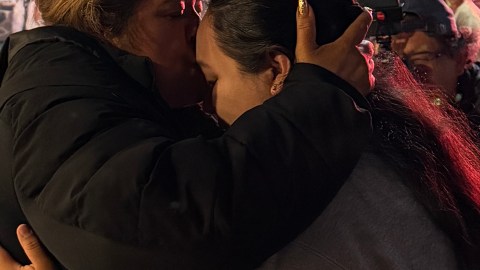
More than a month and a half after being deported to Mexico, María de Jesús Estrada Juárez, a beneficiary of the Deferred Action for Childhood Arrivals (DACA) program, returned to the United States on March 30.
Support María with donations for her aesthetic defense and expenses while she can return to work.
“I walked through San Isidro on March 31, and my daughter Damaris was waiting for me in San Ysidro. Together we took a plane in San Diego heading to Sacramento where we live,” said María de Jesús in an interview with The Opinion.
María de Jesús was deported on February 19, a day after being arrested at the offices of the Citizenship and Immigration Services (USCIS) in Sacramento, where she had gone to meet an appointment for her residency process.
“At the end of the interview, they detained me in front of my daughter. I felt as if they had killed me while I was alive. Looking devastated at my daughter who was accompanying me to the residency appointment because she is the petitioner, it was very traumatic,” she says.

The return to the United States, and specifically to California, on March 30 was possible because federal judge Dena M. Coggins ordered federal authorities to facilitate María’s return within seven days, and return her DACA status as if her February deportation had never occurred.
The judge ruled that the deportation of this DACA mother had been illegal, and that she was also not given the opportunity to consult a lawyer, fight against it, or have access to due process.
María is a 42-year-old single mother, her daughter Damaris Bello is 22 years old. She was born in Puebla, Mexico; and emigrated to the country when he was 15 years old. In 2013, she became a beneficiary of DACA, the program that granted her a work permit and cancels any deportation attempt against her.
In Sacramento he works as a property manager.
The 49 days that she was deported in Mexico, she spent in her town Atlixco, Puebla where her mother and siblings live.
“Although I had the hope of returning to my homeland to visit my family, being away from my only daughter was very hard. We had never been separated. She is the most important part of my family. It was very difficult for her to see me handcuffed, and a phone call is not the same as accompanying us every day. We are perfect for each other.”
When she was separated from her daughter, – she says – she felt like everything was ending.
“Now what am I going to do? My daughter is going to be left alone. I am the head of the family,” she asked herself overwhelmed over and over again.

He says they were very distressing moments.
“They were not only ending my life, but also my daughter’s; suddenly they take everything away from you, and they create a lot of uncertainty, a lot of stress; I even got sick from the pressure.”
It was his daughter who promised him that they would do everything possible for him to return home.
“We approached the media and asked for aesthetic help.”
Although he recognizes that his return to the United States has been a great victory, he affirms that he continues in the fight to obtain permanent immigration status.
She is awaiting a decision on a pending motion to reconsider USCIS’s denial of her residency, based on an incomplete deportation order issued in 1998, when she was just 15 years old and unaware of the proceedings against her.
“We don’t know what’s going to happen. Everything is still very uncertain, my application for residency is still pending.”
Although reuniting with her daughter and returning home has brought her great relief, both she and her daughter have been left with trauma.
“My daughter and I live with uncertainty, fear, insecurity. My daughter is too stressed, she doesn’t want me to go to the store alone. If they knock on the door, she doesn’t want to open it, she’s scared; I’m also afraid of being arrested again.”
Additionally, your application to renew DACA is pending; and meanwhile he cannot work or move forward.
However, despite the trauma and fear that haunt her, she remains positive about fixing her immigration status, and that her case will help other deportees so that they do not lose hope of returning and reuniting with their family.
“Being away from the people you love is very difficult. There are no words to describe what it feels like to have your daughter taken away from you. No one knows how much it hurts until you are in those people’s shoes. I had seen it on the news, it doesn’t compare until you live it”.
Her daughter, Damaris Bello, admits that she did not know when or if her mother would return.
“Our family was devastated overnight. This should never happen to anyone. We fought every day to bring her home, and we are so relieved that she is finally back where she belongs.”
Meanwhile, attorney Stacy Tolchin said this case makes clear that the government cannot ignore due process or basic legal protections.
“Maria was deported illegally, without having the opportunity to speak with her lawyer or challenge her deportation. The court’s order confirms that what happened to her was not only unjust, but also illegal.”
He added that they will continue to fight to ensure accountability and prevent this from happening to others.

Maria Praeli, director of government relations and advocacy for FWD.us., the organization that assisted her with the process and put her in touch with Attorney Tolchin, said Maria’s experience underscores the lack of permanent protections for DACA recipients.
“Since its inception, DACA has been an extraordinary success with broad bipartisan support, but the only way to provide lasting certainty to families and prevent situations like this from happening again is through legislative action, which is long overdue.”
He added that the immediate priority is to ensure accountability in cases like Maria’s, close gaps in DACA processing, and move toward lasting solutions that recognize the realities of people’s lives.
In turn, Ivonne Rodríguez, spokesperson for FWD.us, who followed María on her journey, even traveling to Mexico to advocate for her return, said that seeing her strength and resilience has been truly inspiring.
“It is time to secure and maintain permanent legal protections for people like Maria, so that others do not have to face these challenges.”
According to Department of Homeland Security (DHS) data from early 2026, the Trump administration arrested 261 DACA recipients and deported 86 of them between January 1, 2025 and November 19, 2025.
“This should never have happened: Maria is a Dreamer who played by the rules, maintained an active aesthetic status, and has called Sacramento home for nearly three decades,” said Senator Alex Padilla.
“I am grateful that he is finally back home, with his daughter in Sacramento, where he belongs. I will continue to fight for the hundreds of thousands of DACA recipients who continue to be targeted by this Administration’s mass deportation agenda, an illegal and merciless agenda.”
Federal court orders return of deported DACA mother
Delays in DACA renewal keep dreamers on edge


