
“Low-grade” brain tumors, often misnamed benign, are characterized by slow growth but can infiltrate brain tissue. Unlike other tumors that are considered benign, such as basal cell carcinomas, treatment does not guarantee a complete cure.
This type of tumors mainly affects young adults between 30 and 50 years old. Low-grade gliomas have an incidence of 1 to 3 per 100,000 inhabitants per year, compared to glioblastomas (high-grade tumors), which affect 4 per 100,000 annually. This group covers more than 120 different types of brain tumors.
The explanation is relevant because this June 8th is International Brain Tumor Day.
“In the body we have malignant tumors, cancer, and the benign ones are called that because timely surgery practically always cures you,” he told EFE Health the neurologist and oncologist Juan Manuel Sepúlveda, coordinator of the Neuro-oncology Service of the Health facility Universitario 12 de Octubre in Madrid.
But Sepúlveda clarifies that this is not the case of so-called “benign” brain tumors: “In the brain, since it is very difficult to remove everything with a margin because there are many structures that cannot be touched, even though they are not very aggressive, they will almost always reproduce, even if it is many years later,” since it is difficult for surgeries to achieve a cure.
He adds that the opposite case to low-grade gliomas are meningiomasmasses that affect the meninges, inside the skull, but not the brain. 95% of them are benign, non-infiltrative and their location allows more effective surgeries.
Initial symptoms and diagnosis
The low grade tumors They usually manifest in an insidious manner, with symptoms such as epileptic seizures and persistent headaches. While, on the contrary, the Glioblastomas are the most aggressive brain tumorswhich cause brain damage that is reflected in the mobility of arms or legs, vision or speech.
For its diagnosis, in addition to magnetic resonance imaging, a biopsy or surgery is required, a result that will also reveal associated genetic mutations.
Treatment strategies
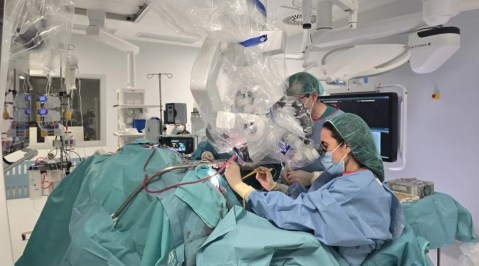
Surgery is considered the first essential step in treatmentexplains to EFE Dr. Ángel Pérez Núñez, section head of the Neurosurgery Service at the Health facility 12 de Octubre. Even more than 90% of patients can be operated on without complications, although complete removal of the tumor is achieved in only 30 to 60% of cases.
“It is estimated that resections that are above 70/80% of the tumor volume have a very positive impact on survival,” says the neurosurgeon.
The specialist believes that considering this type of low-grade tumors benign leads to confusion, since it is estimated that over the years “70% of patients end up dying from the tumor itself.”
Also radiation is usually used. It is required if the tumor could not be completely removed, if it was all removed, or if it reappeared after surgery. Its goal is to reduce the size of the tumor and prevent growth. It may include radiosurgery (such as Gamma Knife) for small tumors or in difficult locations.
On the other hand, recently Inhibitors of the IDH mutation have emergedwhich offer new hope to slow the progression of these tumors before resorting to more aggressive treatments such as chemotherapy and radiotherapy.
You may also be interested in:
· What you should do if someone has a stroke: steps to follow in an emergency
· Just one serving of ultra-processed foods increases dementia risk
· The body’s signals when the thyroid stops working well


