

By Franklin Delgado
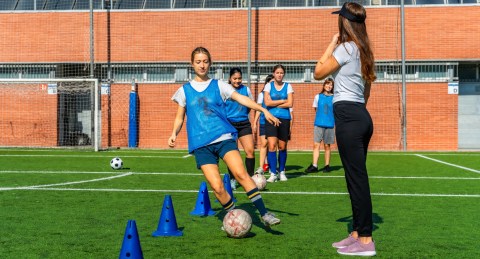
The International Football Association Federation (FIFA) has launched a project focused on the health and performance of women in football. This advancement seeks to address the lack of information and research on the specific needs of female athletes.
The project includes online modules covering 13 critical topics, including pregnancy and fertility, nutrition and recovery.
These modules are the result of peer-reviewed research and data, evidencing the lack of focus on women’s sports science, which currently represents only 6% of research in this field.
According to evidence, women are often trained with methods developed for male athletes due to the lack of information available on how to optimize their performance, he says. Related Press (AP).
Comprehensive training
Beyond athletes, FIFA seeks to train coaches, administrators and support staff at all levels of the sport. The initiative also aims to normalize language and combat taboos related to women’s health.
Sarai Bareman, director of women’s football, highlighted the importance of the initiative. He stated that his goal is to “optimize the health, well-being and performance of each player,” ensuring that players receive the necessary support according to their specific needs.
This new strategy is based on a pilot project carried out before the 2023 Women’s World Cup.
Anatomical, hormonal and strength differences
You cannot train a female athlete the same as a male athlete because Their bodies have key physiological, hormonal and anatomical differences that affect how they respond to training, recover, and get injured.
- Hormones. Women should adapt the intensity according to the phase of the cycle; iron and recovery are critical.
- Strength and muscle mass. Women: They have less muscle mass and strength (30% less than equivalent men). Men can handle more strength intensity, while women require more progressive power work.
- energy metabolism. Women metabolize more fats and fewer carbohydrates. Nutrition and carbohydrate timing should differ.
- Anatomy. Women: Wider pelvis, lower center of gravity, less dense bones. Women need more proprioception exercises to prevent ankle/knee injuries.
- muscle laxity. Women have hypermobility (more versatile tissue), which is why they are at greater risk of injury. They must prioritize joint strengthening.
- Recovery. Men have a faster recovery in strength, while women respond differently to rest and stress. Women should consider a rest schedule, considering the menstrual cycle.
What does this mean in practical terms.
- Men: They must monitor excess intensity and muscle rigidity.
- Women: They must attend to their menstrual cycle, iron level and pelvic floor; They prefer group classes for greater group motivation.
- Impact exercise: More suitable for women to maintain strong bones.
- Proprioception: More recommended in women to strengthen joints.
Ignoring these differences can cause injuries or frustration; understanding them opens the door to training more efficient and healthy. The basic principles (volume, intensity, rest, nutrition) are the same, but the paths to get there differ.
You may also be interested in:
· It’s not just a matter of genetics! Factors that cause women to live longer than men
· Nutritional strategies to increase muscle mass
· Ultra-processed foods and muscle health: new study reveals concerns


