
In the hours before the announcement of the two-week ceasefire between Iran and the United States, there were small hopeful signs from Pakistan.
In an anonymous statement, a Pakistani source revealed to the BBC that talks were continuing “at their own pace”, with Pakistan acting as an intermediary between Iran and the US.
The source indicated that he was not part of the “very small circle” carrying out the negotiations but was able to reveal that the mood in his country’s delegation was “somber and serious, although there was hope that a cessation of hostilities was near.”
Pakistan has acted as an intermediary between Iran and the US in recent weeks, passing messages between the two. It has a common border and a historical relationship with Iran that it regularly portrays as “brotherly.”
As for the US, President Trump has referred to the commander of Pakistan’s armed forces, Field Marshal Asim Munir, as his “favorite” official and has said that he knows Iran “better than most.”
However, a possible agreement was still far from being finalized.
Speaking in Parliament on Tuesday night, Pakistani Foreign Minister Ishaq Dar said: “Until yesterday, we were optimistic that things were moving in a positive direction,” before Israel launched an attack on Iran on Monday and Iran attacked Saudi Arabia.
But his country, he added, “continued to try to manage the situation as best as possible.”

Field Marshal Munir was even publicly critical. Addressing military officials on Tuesday, he said the Iranian attack on Saudi Arabia undermined “sincere efforts to resolve the conflict peacefully.”
Those were some of the strongest words used by Pakistan towards Iran since the beginning of the conflict.
Some analysts said that could add more pressure to Iran.
Pakistan has a defense pact with Saudi Arabia, which has not been invoked at present, despite repeated attacks on the Saudi nation.
“One step forward”
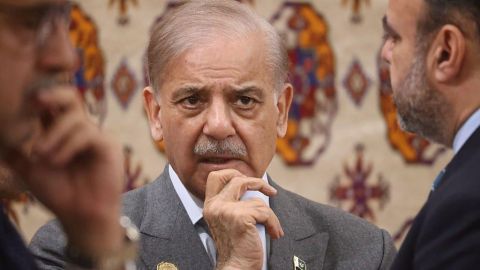
Despite that criticism, after midnight in Pakistan the country’s Prime Minister Shehbaz Sharif posted a message on
Sharify asked President Trump to extend the deadline to two weeks and for Iran to open the Strait of Hormuz during the same period.
Iran’s ambassador to Pakistan, Raza Amiri Moghadam, wrote in X in the early hours of the morning that “a step forward had been taken, in the middle of an objectively correct and critical stage.”
Shortly before 5 a.m., Pakistan’s prime minister announced that the ceasefire had been agreed and invited the two sides to meet in Islamabad on Friday, April 10, to “negotiate further until a final agreement is reached.”
“We are still very circumspect,” the Pakistani source told the BBC, adding that the situation remained “continuingly fragile.” Positions are strongly entrenched and mutual distrust persists.
While Pakistan could still host a negotiating table, the dilemma remains finding points on which the parties can agree.

click hereto explore more stories from BBC News World.
Subscribe hereto our new e-newsletter to receive a selection of our best content of the week every Friday.
You can also follow us on YouTube, instagram, TikTok, x, Facebookand in our whatsapp channel.
And remember that you can receive notifications in our app. Download the latest version and activate them.
- What is known about the agreement reached by the US and Iran for a two-week ceasefire and the reopening of the Strait of Hormuz
- “The Iran ceasefire deal is a temporary victory for Trump that could come at a high cost”
- How food supplies to Iran are affected by the closure of the Strait of Hormuz


