
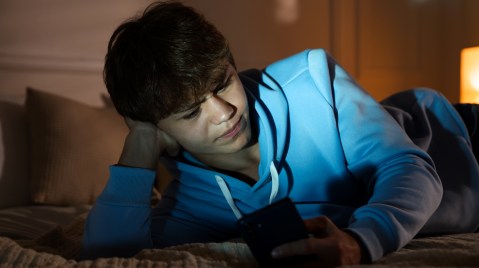
That phrase about young people spending their time glued to their devices has a literal meaning. A study reveals that more than half of teenagers in the United States use their mobile phones at night, affecting their rest time. Data indicates that many are active on social networks and applications between 10 pm and 6 am
Lack of sleep, especially in adolescents, can negatively impact their cognitive development, emotional regulation, and mental health. The American Academy of Pediatrics and the American Academy of Sleep Medicine even recommend that they should sleep between eight and ten hours, more than adults.
Previous research indicates that adolescents are more likely to experience symptoms of anxiety and depression when they do not get enough sleep.
Investigation Revelations
The study indicated that more than half of teenagers used their phones in the middle of the night, between 12 a.m. and 4 a.m., according to the study’s lead author, Jason M. Nagata, an associate professor of pediatrics at the University of California, San Francisco. cnn.
Data collected from the Adolescent Brain Cognitive Development Study show how patterns of mobile phone use and specific types of uses reduce sleep during nighttime hours.
“By depriving adolescents of the opportunity to sleep, they find it difficult to get enough rest, which negatively impacts their waking behavior, as we have known for many years,” said Dr. Mary A. Carskadon, a professor of psychiatry and human behavior at Brown University, who was not involved in the study.
“When you’re supposed to be sleeping, your arousal levels should go down, but those types of interactions are what increase your arousal and make it more difficult to sleep,” Carskadon said.
Strategies to improve sleep
Experts advise that parents model healthy behaviors in the use of devices. Creating family boundaries and safe device use plans is vital to encouraging healthier sleep habits.
Several strategies are suggested, such as establishing screen-free zones, device-free schedules, and keeping phones out of the bedroom. These measures seek to reduce the negative impact of nocturnal distractions on adolescent sleep.
Effects of electronic devices on mental health
The excessive use of mobile devices in adolescents is associated with multiple negative effects on their mental health, the most documented being:
Emotional and psychological disorders:
Anxiety and depression. Direct relationship with digital addiction; Those who misuse devices are more likely to suffer from it.
Low self-esteem. Especially linked to women who use mobile phones before the age of 13; also by comparisons on social networks.
Irritability and emotional disconnection. These are common symptoms of digital dependency.
emotional instability. Young people with a smartphone before the age of 12 are more susceptible to suicidal thoughts and aggression.
Sleep disturbances
- The light of the phones suppresses melatonin up to 22%affecting the production of this sleep hormone.
- Using more than 5 hours a day is associated with insomnia and shorter sleep duration.
- Sleep difficulties are most important mediator that connects mobile use with depressive symptoms.
Other specific effects:
- Social isolation and less interest in other activities.
- Concentration difficulties and memory, affecting academic performance.
- Phantom vibration syndrome (imaginary sensation that the cell phone vibrates or rings)
- chronic stress and mental fatigue.
Critical part: age of onset
- Have a first smartphone before the age of 13 negatively impacts mental health in young adulthood (18-24 years), with a greater risk of reduced self-esteem and emotional resilience (in women).
- Less stability, tranquility, self-confidence and empathy (in men).
- Access to social networks approximately explains 40% of this connection.
- Adolescence is a period susceptible to psychoneurobiological changes, which makes excessive use particularly risky.
You may also be interested in:
· Climbing stairs is a great exercise for your health
· Sleep quality not only depends on whether you sleep more than eight hours
· Why do we tend to go to bed and get up earlier as we get older?


